When customers use the drive thru, a few seconds of friction can be the difference between a loyal customer who returns to Starbucks and one who chooses a competitor for their next morning drink order. Starbucks had done research on the in-store barista experience in the drive thru, but not the customer’s experience.
I led research to create a long-lasting source of knowledge to strengthen the company’s strategic focus through highlighting the needs for a dedicated drive thru team and creating a user-centered point of view for product decision making.
The team’s problem
While Starbucks has been a big player in the drive thru space for decades, our teams were running on old, disjointed data when making new product decisions. We wanted to give them fresh, all-encompassing research that they could lean on when making hard choices.
Goals
We wanted to:
- Give the product team a comprehensive and robust narrative that gives them a deeper understanding of our customers
- Create a user-focused resource that can be referenced and will last for years
What we did
In order to give our team a long-lasting resource, we decided to build a journey map and cognitive flow for a more visual and easy to read experience. This was made through observations, diary studies, and interviews with a variety of customers to learn how they make decisions and main pain points in the drive thru.
After we finished testing and created our resources, we ran workshops with 60+ cross-functional team members to introduce them to the material and leverage their experience to brainstorm new products and solutions.
The outcome
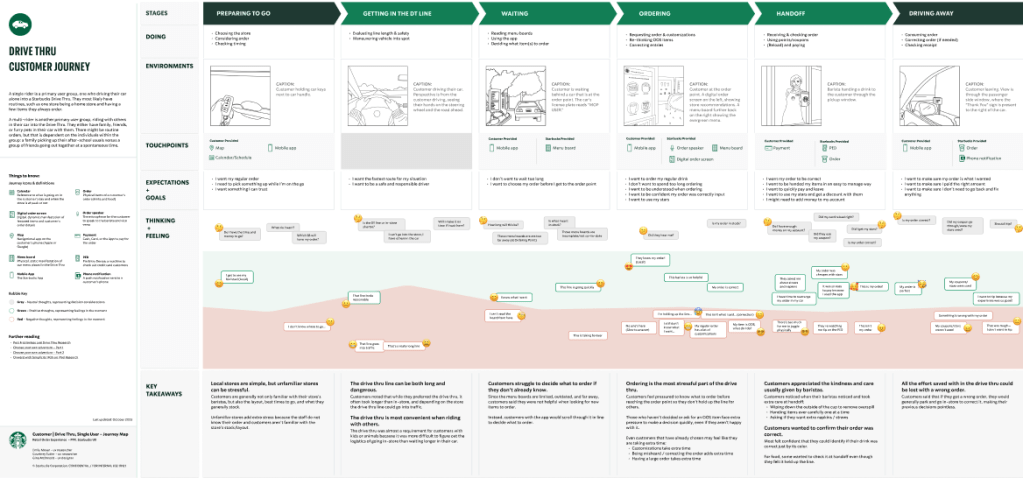
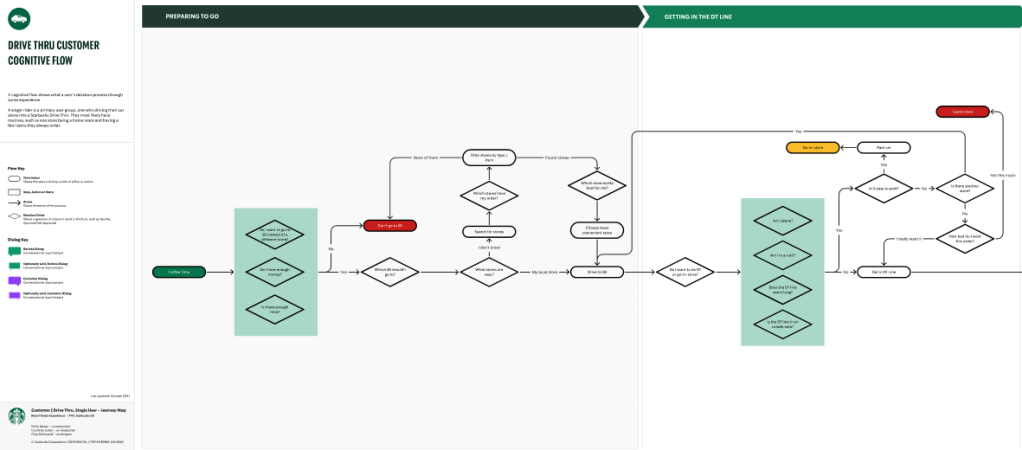
Our journey map has become a cornerstone of onboarding new drive thru team members to ground them in the customer experience. This was especially useful when the drive thru team was officially created this year – the new product team and I worked together to create an informative introductory workshop so they could hit the ground running with the wealth of previous knowledge they could access.
Separate from the drive thru team itself, other teams have seen the success of these foundational resources and requested similar research for their own teams to have one base source of knowledge.
 Emily Moser's Portfolio